Thursday, 4 April 2019

Cultutral Studies-Types of Cultural Studies

Cultural Studies-Types of Cultural Studies

Sr. no.
Types of cultural Studies
`
Major writers & their works (year)
Thought, Ideas, Concepts
(1)
British cultural materialism
- Matthew Arnold
-  Redefine the “givens “ of British culture
- Analyses of bourgeois culture.
- Edward Burnett Tylor’s pioneering anthropological study  “Primitive Culture “ (1871).
- Culture or civilization, taken in its widest ethnographic sense, is a complex whole which includes knowledge, belief, art, morals, law, custom, and any other capabilities and habits acquired by man as a member of society “.
- Claude Levi-Strauss (work – The Raw and the cooked in 1975)
- To attribute culture the working class as well as the elite.
- Gramsci  (Selection from the prison notebooks)
- Concept of “hegemony”
-  Althusser
(For Marx 1965)
- Concept of ideology
-  Walter Benjamitn
- Concept of “aura of culture “.
- Lukacas
- Reflection theory
- Bakhtin Mikhail
(The dialogue imagination)
- Concept of “Disinterested “.
(2)
New Historicism
- Michel warner
- “The text is historical and history is textual”.
- Frederick Jamson
- “Always historicize”
- Stephen Greenblatt
- “New Historicism “
-  Michael Foucault
- “Theory of power and knowledge “.
- H. Aram veeser
- “The moment of exchange “.
-  Porter
- “World views magisterially unfolding as a series of table in a flim called progress”.
(3)
American multiculturalism
-  Richard Lewontin
- He found that most genetic differences were within racial groups not between them.
- Henry Louis Gates
- Uses the word “Race” only in quotation marks, for it pretends to be an objective term of classification “.
Ø  1.        
African American writers
- Ralph Ellison
- He argued that any “Viable theory of Negro American culture obligates us to fashion a more adequate theory of American culture as Whole”.
- Folkloric
- Concept of humankind, a “Double Consciousness “.
- Hurston
- Concept of “Niggerati”, celebrated, black culture.
Ø  2.
Latina/O writers
- Latonas
- They have the task of redefining not only ethnicity but also gender roles and histories different from their men.
- Rudolfo Anaya
(Bless me, Ultima(1973)
- Focuses on the impact of world war 2 on a small community in a New Mexico.
- Guadalupe Hidalgo
- Concept of early trajectories to refer to sequence timing and speed.
Ø  3.
American Indian Literature
       
Ø  4.
Asian American writers
- Edward Said
- Concept of orientalism
(4)
Post Modernism and Popular culture
1.       Post Modernism
- Henry james
(The art of fiction)
- Using new techniques drawn from psychology, experimented with point of view, time, space, and  stream of consciousness writing.
- Jean Francois Lyotard
- He argues that the stability is maintained through “Grand narratives “ or “Master narratives “.
2.       Popular culture
-           
-           
(5)
Postcolonial Studies
- Edward Said
-  “Concept of orientalism “.
- Gayatri chakravorty
Spivak
- Theory of “Subaltern “.
- Homi K. Bhabha
- Post colonialism theory involves analysis of nationality, ethnicity and politics with poststructuralist ideas of identity and indeterminacy, defining postcolonial identities as shifting, hybrid constructions.


Structuralism thinking activity

Structuralism - thinking activity


        In literary theory structuralism is an approach to analysing the narrative material by examining the underlying invariant structure. Structuralist critic find same structure in many literary work in same way we found many same structure in movies, serial and advertisment. we find in some literary work  there where same structure repeat several time.  


  • Patriotism is supporting your country all the time, and your government when it deserves it.


The tree of liberty must be refreshed from time to time with the blood of patriots and tyrants. - Thomas Jefferson


Patriotism means love of one's country. Patriotism is a common virtue. There is hardly anyone who does not love his country. If there is, he is not fit to be alive. Sir Waiter Scott says that such a man will die "Unwept, unhonoured and unsung."

Some of examples of  Patriotism :

1. Kesari  : - 

Movie Review: Akshay Kumar's 'Kesari' Is Yet Another Contrived Nationalist Drama

Kumar playing a patriot, in a film set in pre-independent India, restoring dignity and pride to his fellow countrymen. Which film is that: Gold or Kesari? A middle-aged man, in love with his wife, recognising a social taboo and proposing a tradition-defying solution, empowering millions of Indians. Which film again: Toilet or Pad Man? An undercover agent, not afraid to bend rules, in the service of the nation: Rustom or Naam Shabana? A review generator, as you can see, will save everyone’s time. It is only fair, after all, that his audience gets the same privilege as the star: of easy  epetition.  

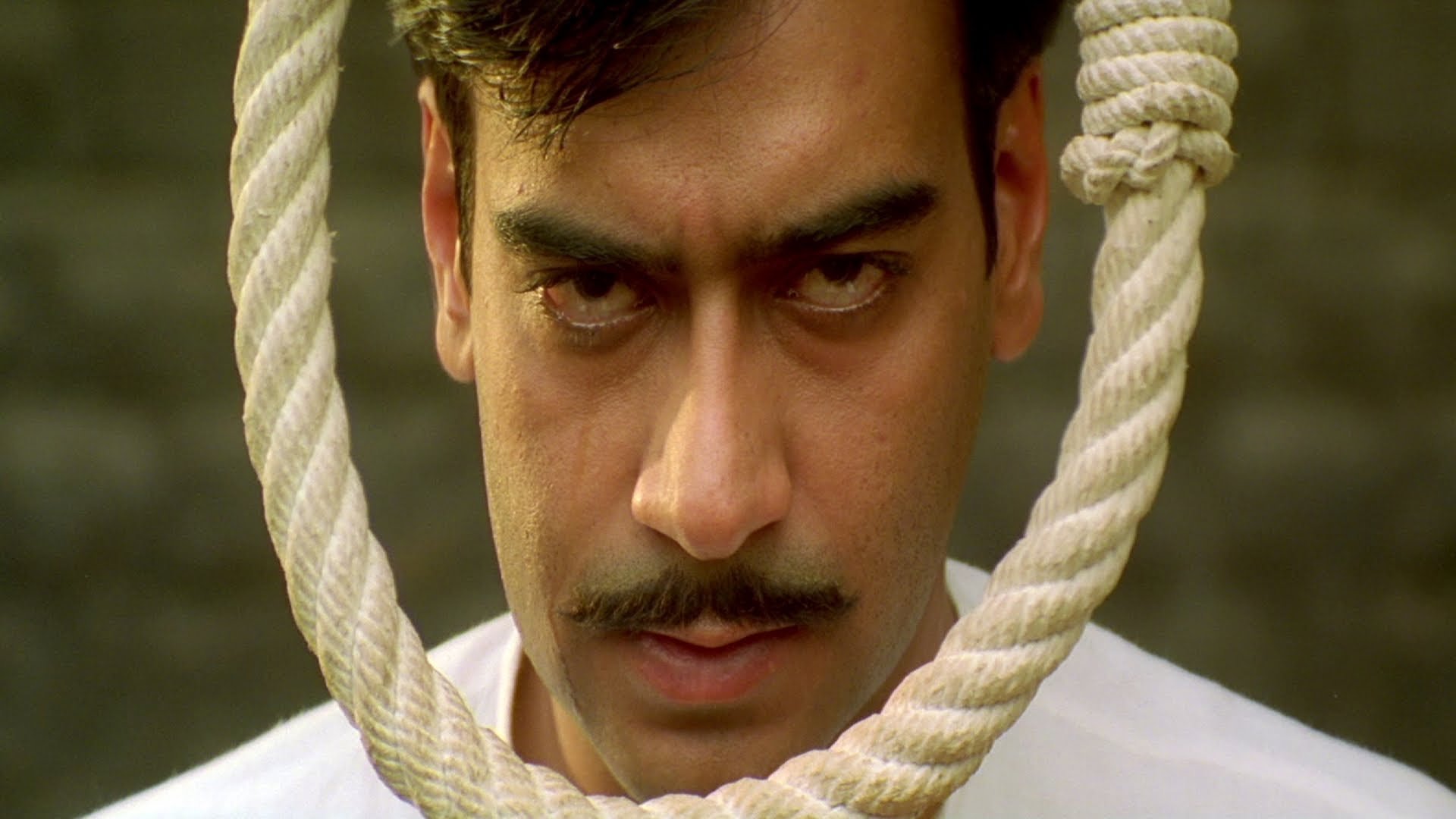
2. The Legend of Bhagat Singh


Rajkumar Santoshi's fantastic retelling of the story of the young freedom fighters Bhagat Singh, Sukhdev and Rajguru, who willingly tied the noose around their necks, filled us with pride and made us introspect.

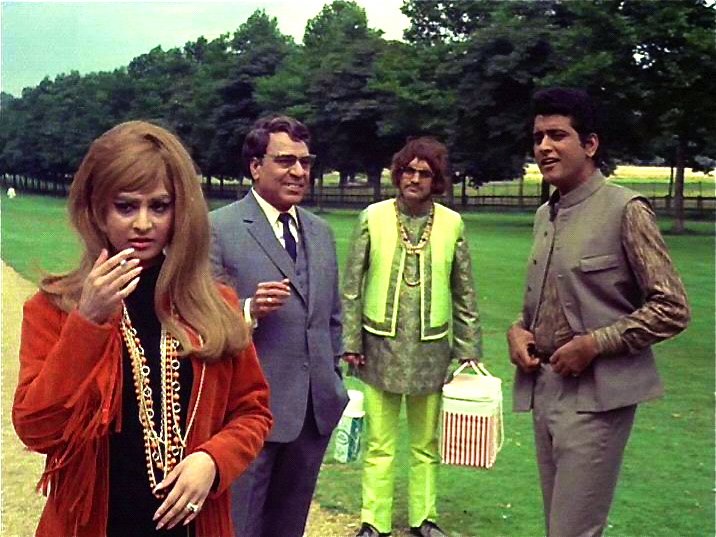
3.Purab Aur Paschim


Manoj Kumar giving it to the West, and making our eyes brim with pride. Enough said.

Northrope Frye : Thinking activity


Northrope Frye


Image result for northrop frye


Herman Northrop Frye CC FRSC (July 14, 1912 – January 23, 1991) was a Canadian literary critic and literary theorist, considered one of the most influential of the 20th century.

Frye gained international fame with his first book, Fearful Symmetry (1947), which led to the reinterpretation of the poetry of William Blake. His lasting reputation rests principally on the theory of literary criticism that he developed in Anatomy of Criticism (1957), one of the most important works of literary theory published in the twentieth century. The American critic Harold Bloom commented at the time of its publication that Anatomy established Frye as "the foremost living student of Western literature." Frye's contributions to cultural and social criticism spanned a long career during which he earned widespread recognition and received many honours.


Thinking activity

T.S.Eliot:Tradition and Individual Talent


Image result for T.S.Eliot

T.S.Eliot:Tradition and Individual Talent


"Tradition and the Individual Talent" (1919) is an essay written by poet and literary critic T. S. Eliot. The essay was first published in The Egoist (1919) and later in Eliot's first book of criticism, "The Sacred Wood" (1920). The essay is also available in Eliot's "Selected Prose" and "Selected Essays".


     While Eliot is most often known for his poetry, he also contributed to the field of literary criticism. In this dual role, he acted as poet-critic, comparable to Sir Philip Sidney and Samuel Taylor Coleridge. "Tradition and the Individual Talent" is one of the more well known works that Eliot produced in his critic capacity. It formulates Eliot's influential conception of the relationship between the poet and preceding literary tradition.


Rivers and Tides

Andy Goldsworthy


Andy Goldsworthy lives in Penpont, a small village in the glorious rolling countryside 40 minutes from Dumfries in Scotland. He moved there in 1986 because it was cheap, living first in a small flat until he and his family – he has four children – moved into this house that was designed with much of his work literally embedded in the walls.


We meet in his office, adjacent to the house. "I do not have a studio; the outside is where I work." He does have a drawing studio nearby that has plans of potential projects, many of them abroad, pinned on the walls.


Sitting with Goldsworthy, I am aware of the surroundings, the light on a tree outside the window, the leaf works ranged around us. It is as if his observation has permeated my looking. After our conversation, I feel the need to look more carefully at my surroundings. "That is all there is," he says. "Seeing what is there."


Goldsworthy owns one field outside his home but makes his work in the adjoining fields. He started working as a farmer's apprentice in his teens. "Farming was as important, if not more important, than art school as a training ground," he says. "Learning how to work hard all day is a really important thing."


Personal life

In 1982, Goldsworthy married Judith Gregson. They had four children and settled in the village of Penpont in the region of Dumfries and Galloway, Dumfriesshire, in southwest Scotland. The couple later separated. He now lives there with his partner, Tina Fiske, an art historian whom he met when she came to work with him a few years after he separated from his wife.

Awards

  • 1979 – North West Arts Award
  • 1980 – Yorkshire Arts Award
  • 1981 – Northern Arts Award
  • 1982 – Northern Arts Award
  • 1986 – Northern Arts Bursary
  • 1989 – Northern Electricity Arts Award[5]

Rivers and Tides

Rivers and Tides is a 2001 documentary film directed by Thomas Riedelsheimer about the British artist Andy Goldsworthy, who creates intricate and ephemeral sculptures from natural materials such as rocks, leaves, flowers, and icicles. The music was composed and performed by Fred Frith and was released on a soundtrack, Rivers and Tides (2003).

The film received a number of awards, including the ‘Best Documentary’ awards of the San Diego Film Critics Society and the San Francisco Film Critics Circle. It is an Anglo-German co-production by Mediopolis Film and the British independent film company Skyline Productions.

In 2018, Goldsworthy, Riedelsheimer, and composer Frith released a follow-up documentary, Leaning Into the Wind.


Mathew Arnold-Study of Poetry

Mathew Arnold 


        Matthew Arnold (24 December 1822 – 15 April 1888) was a British poet and cultural critic who worked as an inspector of schools. He was born at Laleham on the  hames, the eldest son of Thomas Arnold, historian and great headmaster of Rugby, and of  ary (Penrose) Arnold. He was educated at Winchester; Rugby, where he won a prize for a poem on "Alaric at Rome"; and Oxford, to which he went as a Scholar of Balliol College in 1841, and where he won the Newdigate Prize for "Cromwell, A Prize Poem," and received a Second Class in litterae humaniores, to the regret though hardly to the surprise of his friends. Always outwardly a worldling, he had not yet revealed the "hidden ground of thought and of austerity within" which was to appear in his poetry. "During these years," writes Thomas Arnold the younger in Passages in a Wandering Life, "my brother was cultivating his poetic gift carefully, but his exuberant, versatile nature claimed other satisfactions. His keen bantering talk made him something of a social lion among Oxford men, he even began to dress fashionably."


Study of Poetry


1. Write about the one idea of Mathew Arnold which you find interesting and relevant in our time. 

Ans.  'A study of poetry ' is a critical essay by Mathew Arnold. He gives definition of poetry that " Poetry is the criticism of life " .   It is true that poet is critic of life and this definition is a very relevant in our time.


He also  discussed the idea of disinterested or detachment.  .He says that the critic must be absolutely impartial without any prejudice or bias against or in favor of any particular author. Disinterested on the part of the critic implies freedom from all the prejudice,  personal and historical . 


2. Write about one idea of Mathew Arnold which you find out of date and irrelevant in our time. 

Ans.  Mathew Arnold 's idea about " Touch - Stone  Method "  is out of date and irrelevant in our time because Arnold's touchstone method is a comparative method of criticism.  This method is comparison and analysis as two primary tools for judging individual poet. Even a single  line or selected quotation will serve the purpose, if the other works moves us in the same way as these lines and expression do, then it is a great work otherwise not. so it is not appropriate in present time and it is not appropriate way to passing judgement on the bases of comparison with others because time and situation always changing...


मुश्किल तो तब लगा…

ख़ुद को आपको सौंपना आसान था, मुश्किल तो तब लगा…  जब एहसास हुआ कि मेरी क़ीमत ही नहीं समझी गई।